
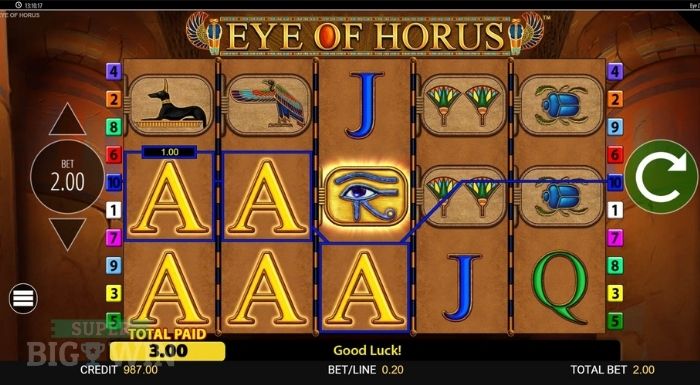
Should you have ever spun the reels of the Eye of Horus slot, you have already come across one of the most iconic payline configurations in online gaming eyeofhorus.games. That single screen of ancient Egyptian symbols contains a deceptively simple system that dictates every win you obtain. I want to take you through the exact way slot paylines operate, using Eye of Horus as our practical example, because after you grasp paylines, you will never look at a slot the same way again. A payline is not just a line across the screen; it is the set of rules that determines whether matching symbols result in a payout. In Eye of Horus, you are consistently playing with 10 fixed paylines that run from left to right, and that fixed nature shapes everything from your bet size to how bonus features explode into life. Let us go through what paylines are, how they generate wins, why fixed lines are important, and how they combine with wilds and free spins, all while maintaining the focus firmly on the game you are looking to understand.
What Precisely Is a Slot Payline?
A slot payline constitutes a fixed path across the reels that the game uses to examine for matching symbols. When you hit spin, the game checks each active payline, beginning with the leftmost reel, and determines whether identical symbols have landed on adjacent reels along that certain line. In Eye of Horus, there are 10 such paths, and they are all permanently active. That means every single spin reviews all 10 patterns, so you never have to determine how many lines to play. The classic payline concept dates back to the earliest mechanical fruit machines, where a single horizontal line across the center was the only way to win. Modern video slots like Eye of Horus maintain that DNA but extend it into zigzag, V‑shaped, and diagonal arrangements that cover the 5×3 grid in clever ways. Access the paytable in Eye of Horus, and you will see exactly which symbol combinations payout on these 10 lines, and the game marks winning lines with a brief animation so you never have to guess. This transparency is what makes payline slots so rewarding: you always recognize the rules, and every spin gives you 10 independent chances to land a sequence of matching icons.
The left‑to‑right rule is the key that enables every payline slot. In Eye of Horus, a winning combination must start on the first reel and proceed along the line without gaps. If you obtain three Pharaoh symbols on reels one, two, and three along payline one, you win; if those same symbols occur on reels two, three, and four but skip reel one, that line pays nothing. This directional requirement is why the first reel often feels so important. I always pay close attention to what lands on that leftmost reel because it dictates whether any payline can even initiate a winning sequence. Scatter symbols are the famous exception, and in Eye of Horus the golden temple scatter pays anywhere on the reels regardless of paylines, which I will address later. For now, just keep in mind that a payline is a particular, unbroken trail that the game follows across the grid, and in this Egyptian adventure you are always working with exactly 10 of them on every spin.
Locked paylines Versus Selectable Paylines
Slot developers have to decide early on whether to include adjustable paylines or lock them in place. Eye of Horus is firmly in the fixed‑payline camp. In an adjustable‑payline slot, you can opt to activate only a portion of the available lines, which lowers your total bet but also diminishes your chances of hitting a win on any given spin. Eye of Horus takes that choice away: all 10 lines are always on, and your bet slider just adjusts the coin value across those 10 lines. I prefer this approach because it eliminates the risk of accidentally playing too few lines and missing a scatter‑triggered feature or a high‑value wild combination that lands on an inactive path. With fixed paylines, you never have to question whether you are playing optimally; the game is balanced around the assumption that every line is live, and the math model, including the 96.31% RTP, is calculated with that full coverage in mind.
The trade‑off with fixed paylines is that your minimum spin cost is larger than it would be on an adjustable game where you could activate just a single line. In Eye of Horus, the lowest possible total bet is 0.10, which converts to 0.01 per line. That is still very accessible, but it means you are always dedicating to all 10 lines. For me, this is a fair trade because it assures that I am never watching a big win land on a line I forgot to activate. Plenty of modern slots have joined Eye of Horus down this fixed‑payline path because it streamlines the player experience and guarantees that every feature trigger, every wild expansion, and every scatter pay is fully available on every spin. When you sit down to play, you can focus entirely on the Egyptian atmosphere and the rhythm of the reels rather than messing with line selectors.
How Paylines Determine Your Bet Size
Your total bet per spin in Eye of Horus is a direct multiplication of the coin value you select and the number of paylines, which is always 10. If you set the coin value to 0.05, your total stake becomes 0.50; push it to 1.00, and you are spinning for 10.00. This transparent relationship makes bankroll management straightforward because you always know exactly how much each spin costs and how that cost divides across the 10 lines. I often use this to fine‑tune my session. When I want to extend playtime, I drop the coin value to the minimum of 0.01, giving me 0.10 spins that still engage every payline. When I am chasing the free spins feature and feeling more aggressive, I raise the coin value, but I never have to worry that I am accidentally betting unevenly across lines. The fixed structure ensures that my risk per line stays perfectly proportional, which is a huge mental relief.
Because all 10 lines are always active, the cost of covering the entire grid never changes relative to the coin value. This has an important psychological effect: you never feel like you are missing out on a potential win because you skimped on lines. Every symbol that lands on the screen is being evaluated against all possible payline paths, so the excitement level stays high. The bet range in Eye of Horus runs from 0.10 up to 100.00 per spin, which accommodates both cautious players and high rollers while keeping the payline math identical at every level. I always remind myself that the return to player percentage does not shift based on bet size, so whether I am spinning at 0.20 or 20.00, the 10 paylines are working with the same underlying probabilities. That consistency is one of the reasons this game has remained so popular across different types of players.
Paylines and Extra features in Eye of Horus
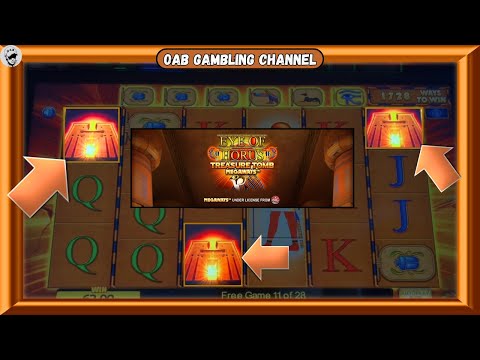
Extra features are where paylines truly demonstrate their power, and Eye of Horus has one of the most gratifying connections between free spins and line wins I have encountered. The mechanic triggers when three golden temple scatter symbols land anywhere on the reels, and because scatters pay regardless of paylines, you do not need them to line up on a certain path. Once inside the free spins, a particular expanding symbol is at random selected from the high‑paying icons. Whenever that symbol shows up during the bonus round, it enlarges to fill the entire reel, and this is where the 10 paylines become extremely effective. An expanded reel fills every row on that column, which means it simultaneously completes winning combinations on various paylines at once. If the expanding symbol stops on the first reel, it can kick off wins on all 10 lines in a one spin, provided the matching symbols proceed along the reels.
The wild symbol in Eye of Horus, shown by the game’s logo, also plays a vital payline function during both the base game and free spins. It replaces for all regular symbols except the scatter, and because it is the highest‑value icon, landing a group of wilds on a payline produces the biggest single‑line payout. During free spins, the wild can appear alongside the expanding symbol, and when that happens, the payline evaluation becomes a chain of overlapping wins. I have seen spins where an expanded Pharaoh symbol on reel two and a wild on reel three create wins across 7 or 8 different lines at the same time, each one determined independently and included to the total. This is the moment when grasping paylines moves from theory to pure adrenaline, because you can literally watch the game trace each line and stack the payouts. The 10 fixed lines ensure that no part of the expanded reel goes to waste, and that full‑grid coverage is what makes the bonus round able of providing the game’s maximum win of up to 500 times your total stake.
The method Paylines Form Winning Combinations
Any symbol in Eye of Horus carries a value, but that value results in a win only when the symbols stop on an active payline in the right sequence. The paytable lists the coin payouts for three, four, or five matching symbols on a line, and those numbers rise steeply as you add more symbols. For example, the Eye of Horus wild symbol is the highest payer; landing five of them on a payline gives the top line hit. Below that, the Pharaoh, the scarab beetle, and the classic card royals complete the hierarchy. I view each payline as its own little mini‑game operating at the same time. On a single spin, payline one might deliver a small win with three Aces, while payline seven shines with four Ankh crosses, and the game combines those payouts together before displaying your total win. Because Eye of Horus uses 10 fixed lines, you are always managing 10 separate opportunities, which is why even a modest spin can suddenly generate a chain of multiple line hits that feel much bigger than the individual amounts.
The actual layout of those 10 lines matters more than most players realize. In Eye of Horus, the lines are not just horizontal stripes; they feature patterns that drop and rise across the three rows. Some lines run across the top row on the first reel, go down to the middle on the second, and climb again on the third. This weaving design implies that a symbol landing in a corner position can still be part of a win if it lies on one of the less obvious paths. I always advise opening the game’s payline information screen at least once, because seeing the numbered lines overlaid on the reels clears any mystery. When you then watch a winning spin, you will see that the same symbol can add to multiple paylines simultaneously if it is positioned at an intersection point. That is how Eye of Horus can provide those moments where the screen seems to explode with highlighted lines, and your balance rises in a satisfying cascade of small and medium wins all triggered by a few well‑placed icons.
Pay Lines Versus Win Ways and Other Mechanics
Eye of Horus sticks to a standard 10‑payline system, but the slot world is filled with different systems, and knowing the distinction will make you a more well-rounded player. Ways‑to‑win slots, like those with 243 or 1,024 ways, eliminate individual paylines altogether and in their place reward for identical symbols on consecutive reels commencing from the left, no matter their upright position. In that system, each symbol on reel one can link with every symbol on reel two, and the count of winning ways grows rapidly. Megaways slots take this even further with a changing reel height that alters on all spin. Cluster pays slots, on the other hand, need groups of adjacent symbols instead of line‑based sequences. Every one of these mechanics possesses its own rhythm, but I continually return to payline slots including Eye of Horus because they deliver a clarity that more intricate systems sometimes lack.
Conventional paylines remain well-liked for a few causes, and Eye of Horus exemplifies all of them. Paylines provide you with a predetermined, foreseeable quantity of chances per spin, which renders bankroll estimates simple. The visual feedback of viewing a particular line highlight builds a straight tie between the symbols on the screen and the win you just earned. Payline slots also pair wonderfully with expanding wilds and stacked symbols because those features can occupy whole lines in a way that appears deliberate and earned. I also recognize that payline games are inclined to have plainly defined symbol values, so you can look at the paytable and quickly understand what a full line of Pharaohs is valued at. While I enjoy experimenting with Megaways and cluster pays, when I wish for a session that evens out ancient atmosphere with rock‑solid mechanics, I open Eye of Horus and enable those 10 lines perform exactly what they were designed to do.
How to Understand a Payline Table and Play Smarter

Every slot, including Eye of Horus, includes a paytable that outlines the exact payouts for each symbol across the active paylines, and learning to read it quickly will improve your choices. Open the information screen and you will see a grid presenting coin wins for three, four, and five matching symbols. The values are usually displayed as a multiple of your bet per line, so if the Pharaoh shows 100 coins for five of a kind and your line bet is 0.01, that win is 1.00. I make a habit of checking the paytable before I start spinning because it reveals which symbols are the high‑value targets and which are merely filler. In Eye of Horus, the wild is the top payer, next is the Pharaoh and the scarab, while the card royals provide smaller, more frequent hits that keep your bankroll steady. Recognizing this hierarchy allows me to stay patient during dry spells, because I know that the big line wins come from the premium symbols, and they are worth the wait.
With fixed paylines, your strategic focus shifts entirely to stake management and bankroll control rather than line selection. I always set a session budget and divide it by my chosen total bet to see how many spins I can manage. in-depth coverage With 10 lines always active, even a modest bankroll of 50.00 gives you 500 spins at the minimum 0.10 stake, which is more than enough for the free spins feature to trigger. I also monitor the gamble feature, which can multiply line wins, but I apply it selectively because it operates outside the payline system and carries its own downside. When the expanding symbol free spins trigger, I track the paylines closely, mentally tracing the paths to see how many lines the expanded reel is covering. This active engagement transforms the game from a passive spin‑and‑hope experience into a more strategic session where I understand exactly why my balance is moving. The 10 paylines of Eye of Horus are not just a small feature; they are the core of the game, and once you understand their rhythm, every spin becomes a little more enjoyable.
- Don’t forget to check the paytable before playing so you understand symbol values and payline patterns.
- Keep in mind that all 10 paylines are fixed, so your total bet is always coin value multiplied by 10.
- Scatter symbols trigger wins anywhere on the screen and do not need to land on a payline.
- Enlarging icons during free spins can finish wins on multiple paylines at once.
- Wild symbols substitute for all regular icons and create the highest single‑line payouts.